How to Stay Healthy While Working From Home

Dusty Rhodes • March 25, 2020

In theory, it’s easier to be healthy when you’re working from home: No office snacks or donuts, you can cook healthy meals, and work out whenever you want.


Win-win-win, right?


The reality, however, probably looks something like this: Slumped on your couch wearing workout clothes you never worked out in (or let’s be honest, your pajamas), tapping away on your laptop, and eating peanut butter out of the jar because you didn’t have the time or energy to make lunch.


Creating a healthy work-life balance is hard enough when you work in an office all day, but it can be just as hard when work and life are happening in the same space.


Find out how you can avoid the pitfalls and maximize the benefits of working from home.


The Benefits of Working From Home


There are undeniable benefits to working from home: the freedom and flexibility of working in familiar surroundings, no co-workers to distract you, being able to wear what you want, time with your pets and/or kids, and the opportunity to knock out some chores, according to Dr. Josh Klapow, clinical psychologist and co-host of “The Web” radio show.


But for every benefit, there’s a potential downside. “Working from home is not for everyone,” says Klapow. “In fact, it can be as much a distraction as it is a productive environment.”


You may not be distracted by co-workers stopping by your desk or people gossiping in the next cube, but there are plenty of opportunities for procrastination.


Think: those household chores, the aforementioned pets (or kids) demanding attention, the lure of Netflix, and the temptation to surf non-work-related websites, to name a few.


Plus, when you’re working from home, it’s easy to skip your workouts, regular meals, social interaction, and even sleep, if you don’t consciously structure your environment to promote healthy habits.


Here’s the good news, though: Staying healthy when you work from home isn’t rocket science.


Follow these 10 practical strategies to help you stay active, eat well, and get your work done.

10 Tips to Stay Healthy While Working From Home

1. Create a designated work area

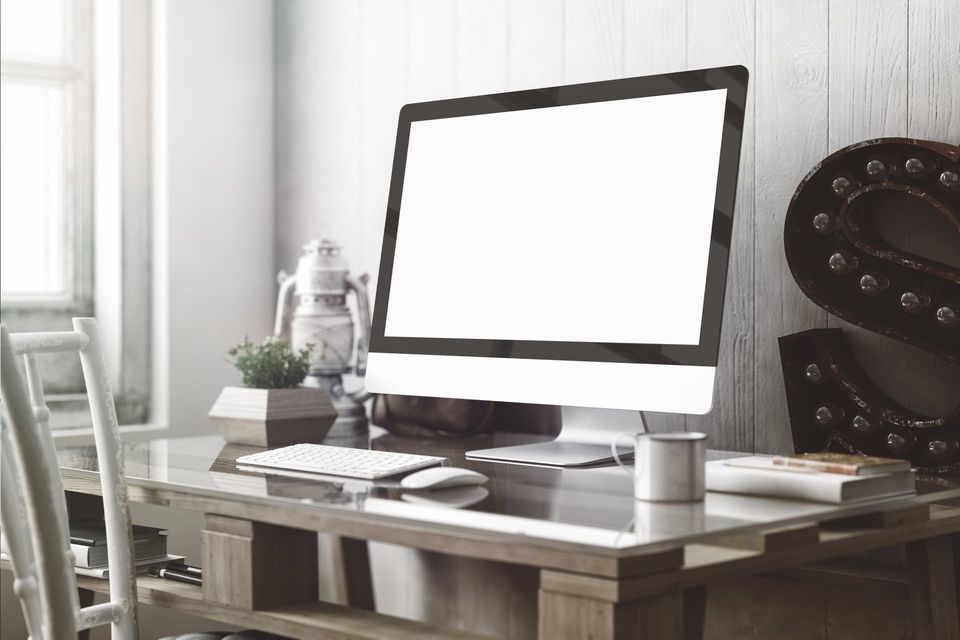
“Your physical surroundings must be conducive to a work mindset,” says Klapow. That’s why it’s crucial to avoid sending emails from the sofa and designate an area of your home for business, whether it’s a separate home office, dining room table, or small desk in the corner of a room.

Klapow says a designated work zone accomplishes several things: “It will assure you have your materials readily available, it will [indicate] to others when you are ‘at work’ or not, [and] it will trigger a working mindset,” he explains.

When choosing an area of your home to work in, consider factors like location, lighting, noise level, and physical comfort.

Pick a clean, quiet spot with minimal distractions, then tweak the space to your liking: Make sure your chair is comfortable, turn your desk to face the window, organize your work materials, display framed photos, and add some greenery.

Research shows that even adding a couple of plants to your workspace can help soothe you and lower your stress levels.
2. Schedule your day

It’s critical to create a structure for your day; even a loose outline can help you stay on task and prioritize your workload.

First and foremost, set clear start and finish times for your workday, advises Klapow.

“Your at-home workday may be shorter or longer than a workplace workday, but it [still] needs to have its own set schedule,” he says.

That includes scheduling a lunch break and time for meetings and phone calls, plus realistic but adjustable windows of time to accomplish the most important items on your to-do list.

When creating your schedule, consider the time of day you feel most energized and alert, as well as the time of day you feel most sluggish or prone to distraction, then organize your tasks and breaks accordingly.
3. Prep meals and snacks

“Nutrition is very important to staying focused, energized, and productive throughout the day,” says Jennifer Glockner, R.D.N. and creator of Smartee Plate. “It’s hard to concentrate and be productive when you’re hungry or your blood sugar is low,” she explains.

Much like eating healthy at the office, Glockner says the key to eating nutritious foods at home is to stock your kitchen with healthy foods and meal prep.

“Limit sugary drinks and foods, such as refined carbs (for example, white bread and baked goods), that will give you a quick energy boost, followed by an insulin spike and consequent low blood sugar in about two to three hours,” she explains. “This can lead to a lack of concentration and feeling jittery, sweaty, or hungry.”

Instead, stock your fridge and pantry with fruits and veggies, whole grains, and lean proteins.

To minimize temptation and prevent overeating — or munching on cereal for lunch — Glockner recommends planning your meals ahead of time and pre-portioning healthy snacks.

“Snack on an orange with a handful of nuts, plain yogurt with berries, hard-boiled egg with a tomato, or hummus with a whole grain cracker or red pepper strips,” she says.
4. Schedule a workout into your calendar

It’s easy to skip workouts when you’re hustling from home, but making time for a solid sweat session has myriad mental and physical health benefits.

Aside from improving your overall fitness, research shows that regular workouts can also help lower your stress levels and increase your energy, which in turn, can help you stay focused and disciplined.

The key to making a workout happen at home is to put it on your calendar, the same way you would schedule a work meeting. “Don’t assume that because you are home you will just work out,” Klapow cautions.

Slot your workout for the early morning before or after work hours, or add it somewhere in the middle of the day when you start to feel antsy — and with a streaming workout service like Beachbody On Demand, you can crush a workout without leaving the house.
5. Relax… within reason

Working from home means you have the luxury of taking an occasional break without having to keep an eye for your boss.

If you’re not careful, though, a well-intentioned mini-break can easily turn into a Netflix marathon or hours-long nap.

If you need a break, “relax but don’t nap,” Klapow advises.

Instead, do something calming that won’t cause you to doze off: Cook a healthy meal, free-write or draw in a notebook, take a brisk walk, or do some yoga.
6. Sit down to eat

It’s normal to plow through your workday without stopping to refuel, but according to Glockner, scheduling time for breakfast, lunch, and dinner can actually help facilitate your productivity.

Why? Because “skipping meals may lead to fatigue and consequent lack of concentration,” she explains.

Not only that, but eating a full meal can help prevent you from mindlessly grazing throughout the day, Glockner says, “which is especially important due to easy access to the kitchen at home.”

While you do sit down to a meal (at your kitchen table, not your work desk!), shut down your electronic devices and practice mindful eating: Take small bites, chew your food thoroughly, and notice the flavors and texture in each mouthful.
7. Get out of the house

Make a point to leave the house — without your car — at least once a day.

Bike to meet a friend for lunch, take your dog or kids to hang out at the park, or replace a coffee break in your kitchen with a walk to the nearest coffee shop.

By getting out of the house, you’ll get some much-needed social interaction, and enjoy some new scenery — in fact, a quick walk may even help boost your creativity.
8. Drink plenty of water

Make sure you stay hydrated throughout the day, Glockner says. “Dehydration may lead to fatigue and headaches, which may compromise [your] alertness and productivity,” she explains.

Aim to drink half your body weight (in pounds) in ounces of water each day.
9. Take mindfulness breaks

“Every hour or so, get up, take a deep breath, and be mindful of your comfortable surroundings,” Klapow advises. “Take in the fact that you may have your dog by your side or a fish tank behind you. Peek outside and look at the flowers,” he says.

Pausing to notice these small joys is like a quick dose of meditation.

“This will not only give your mind a break, it will help you feel more optimistic,” Klapow explains.
10. Develop a shutdown ritual

In a traditional office setting, you know it’s the end of the workday when you pack up your things and head home.

But when you’re already home, the line between work and “home” time can blur. “You cannot allow your workday to simply bleed into your before and after work schedule just because you are at home,” Klapow explains.

That’s why it’s helpful to develop a routine that simultaneously signals the end of the workday and helps you transition away from emails and work projects.

Your shutdown ritual can be as simple as closing your laptop and storing it out of sight, or doing something more involved, like a workout or leaving the house for a stroll or errands.

The 10-Second Takeaway

Don’t let the comfort and familiarity of home get in the way of your work productivity or your health.

By organizing and scheduling your work and home tasks, and creating physical and mental boundaries, you can establish a healthy balance that will make your boss and your body happy.


Dusty Rhodes Properties is the Best Realtor in Myrtle Beach! We do everything in our power to help you find the home of your dreams. With experience, expertise, and passion, we are the perfect partner for you in Myrtle Beach, South Carolina. We love what we do and it shows. With more than 22 years of experience in the field, we know our industry like the back of our hands. There’s no challenge too big or too small, and we dedicate our utmost energy to every project we take on. We search thousands of the active and new listings from Aynor, Carolina Forest, Conway, Garden City Beach, Longs, Loris, Murrells Inlet, Myrtle Beach, North Myrtle Beach, Pawleys Island, and Surfside Beach real estate listings to find the hottest deals just for you!

Share

By Dusty Rhodes November 10, 2025
If there was one simple step that could help make your home sale a seamless process, wouldn’t you want to know about it? There’s a lot that happens from the time your house goes under contract to closing day. And a few things still have to go right for the deal to go through. But here’s what a lot of sellers may not know. There’s one part of the process where some homeowners are hitting a road bump that’s causing buyers to back out these days. But don’t worry. The majority of these snags are completely avoidable, especially when you understand what’s causing them and how to be proactive. That’s where a great agent (and a little prep) can make all the difference. What’s Causing Some Buyers To Back Out The latest data from Redfin says 15% of pending home sales are falling through . And that’s not wildly higher than the 12% norm from 2017-2019. But it is an increase. That means roughly 1 in 7 deals today don’t make it to the closing table. But, at the same time, 6 out of 7 do. So, the majority of sellers never face this problem – and odds are, you won’t either. But you can help make it even less likely if you know how to get ahead. You might assume the main reason buyers are backing out today is financing. But that’s actually not the case. The most common deal breaker today, by far, is inspection and repair issues (see graph below):
By Dusty Rhodes November 3, 2025
You’ve got big plans for 2026. But what you do this year could be the difference between a smooth sale and a stressful one. If you’re thinking of selling next spring (the busiest season in real estate), the smartest move you can make is to start prepping now. As Realtor.com says : “If you’re aiming to sell in 2026, now is the time to start preparing , especially if you want to maximize the spring market’s higher buyer activity.” Because the reality is, from small repairs to touch-ups and decluttering, the earlier you start, the easier it’ll be when you’re ready to list . And, the better your house will look when it’s time for it to hit the market. Why Starting Now Matters Talk to any good agent and they’ll tell you that you can’t afford to skip repairs in today’s market. There are more homes for sale right now than there have been in years. And since buyers have more to choose from, your house is going to need to look its best to stand out and get the attention it deserves. Now, that doesn’t mean you have to do a full-on renovation. But it does mean you’ll want to tackle some projects before you sell. Your house will sell if it’s prepped right. And you don’t want to be left scrambling in the spring to get the work done. Because here’s the advantage you have now. If you start this year, you’ll be able to space those upgrades and fixes out however you want to. More time. Less stress. No sense of being rushed or racing the clock. Whether it’s fixing that leaky faucet, repainting your front door, or finally replacing your roof, you can do it right if you start now. And you have the time to find great contractors without blowing your budget or paying extra for rushed jobs. Get an Agent’s Advice Early To figure out what’s worth doing and what’s not in your market, you need to talk to a local agent early. That way you’re not wasting your time or money on something that won’t help your bottom line. As Realtor.com explains : “Respondents overwhelmingly agree that both buyers and sellers enjoy a smoother, more successful experience when they start early. In fact, a recent survey reveals that, for sellers, bringing a real estate agent into the process sooner can pay off significantly. ” A skilled agent can tell you: What buyers in your local area are looking for The repairs or updates you need to do before you list How to prioritize the projects, if you can’t do them all Skilled local contractors who can help you get the work done And having that information up front is a game changer. To give you a rough idea of what may come up in that conversation, here are the most common updates agents are recommending today, according to research from the National Association of Realtors (NAR): 
By Dusty Rhodes October 13, 2025
From the first coat of paint you used to freshen up your house’s trim to the stress of wrangling your way to a deal, you’ve been through a lot in that place. Now you’ve made it to the final hurdle of selling a home: moving out! Don’t worry, this is the easy part… but you want to do it right. Here’s how to get through the last leg of your journey without any bumps along the way. How to move out on time Once the paperwork is signed at closing, the buyers will officially own the house—and you won’t. That means that, technically, if you or your stuff is still there after the close, “the buyer could evict you,” says Joshua Jarvis , founder of Jarvis Team Realty in Duluth, GA. So make sure to have your exit strategy in place! Still, most buyers will understand if you need a bit more time and have a legitimate reason—like if you can’t move until the weekend due to your work schedule. Just be sure to discuss these issues as soon as possible before the close, so your buyers can plan accordingly. Decide what to leave behind To make sure you’re leaving behind everything the buyer wanted—and that you agreed to—double-check the closing documents . There should be an itemized list of what comes with the house . And even if the buyers didn’t formally request them, it’s just good form to leave certain types of things behind. Such as? “Generally speaking, you should leave anything that’s bolted to the wall,” says Jarvis. “Some homeowners want to take their fans and blinds to the next home, but generally if it’s screwed in, it stays.” Also, if you and the buyers agreed to transfer any services—such as alarm monitoring or pest control —be sure to set that up before you go. Leave the buyers a detailed note in the house, or ask your agent to get in touch with theirs to make sure the transfer goes smoothly. If you do inadvertently take an item that the buyers had requested, they have the right to ask for it back—and they could potentially sue you in civil court for the cost of a replacement. So, when in doubt, feel free to check with the buyers before you grab and go. But don’t leave anything else behind Just as important as what you leave behind is what you don’t. Your buyers have a right to move into a home that’s been cleared of furniture and other movable items they didn’t expressly request. “Some folks leave all kinds of unwanted clothes, furniture, paint cans, and other items, thinking they are helping the buyers,” Jarvis says. If you truly think your buyers might love to have your old planting pots or kiddie equipment, go ahead and ask—but please don’t assume they’ll welcome your leftovers. Even if you’re careful, you might forget something—at which point the buyers may contact their agent to get it back to you, but they also have the legal right to just keep or get rid of it. So double-check areas (e.g., the attic, garage, basement, storage shed, kitchen, and bathroom drawers) where people commonly overlook items. Clean up It’s common courtesy to leave the place not only clear of your possessions but also clean. However, that doesn’t mean you have to leave it immaculate. “Generally, you shouldn’t have to pay to have it deep cleaned,” Jarvis says. In most cases, a simple broom-clean will do. That means wiping down the countertops, cleaning out drawers, sweeping or vacuuming all the floors, and giving the bathroom and kitchen appliances a once-over so the new owners aren’t grossed out when they arrive. Are you forgetting anything? Before you close the door for the last time, run through a quick checklist. Did you eyeball every room for stray items? Have you forwarded your mail and turned off the utilities? Is the water running in the jacuzzi? We all get in a bit of a rush even in the best planned moves, but you won’t be able to get back in, so it can’t hurt to do a final run-through before you move out. Once you’re ready, it’s time to leave. You can drop a line to your real estate agent to let them know you’re out, although it’s usually a courtesy more than a necessity. If you’re feeling truly gracious, feel free to leave a note, card, or bottle of bubbly congratulating the people who’ve inherited your former home. Given all the fond memories you’ve built between those walls, wouldn’t it be nice to start the home’s new owners off on the right foot? And buy yourself some Champagne, too. Make it the good stuff—you’ve earned it.