6 Handyman Skills Every Flipper Should Master
As a rehabber, there are some jobs that are worth knowing how to do. Relying on handymen to fix every small problem is expensive—and time-consuming. Why wait for your go-to person’s availability to open up for a tiny repair?
Or perhaps the job is too small to hire out, and you can’t find anyone who will do it. Most contractors don’t want to pick up tiny jobs. Not worth their time. Or maybe you ran out of money due to unforeseen problems. There are a number of reasons why simple repairs become suddenly (and surprisingly) not-so-simple… or just extremely expensive. That’s when it’s extremely handy to be extremely handy.
And don’t worry: Just because you’ve never picked up a hammer before doesn’t mean you can’t perfect these skills. Basic home maintenance is surprisingly simple, although it may look convoluted, complicated, or simply too-hard on first glance. No need to be muscled, either. Anyone can learn 101-level plumbing. Anyone can spackle a hole in the wall. You might even enjoy teaching your kids a few basic how-tos—you might find they enjoy painting walls or helping place tiling. (Maybe skip the electrical until they’re older, though.)
Whatever the case, here are six jobs that are worth knowing how to do.
6 Handyman Skills Everyone Should Master
Whether you’re flipping or renting your properties—or just wanting to up your DIY skills for your own home—mastering these handyman jobs keeps everything running smoothly.
1. Painting
Everyone should be able to paint. Few supplies are needed—and even fewer skills. A paint roller, paint pan, and paint. Perhaps an extending handle if you are on the shorter end of the yardstick. You can paint the bulk of the wall first, then get the edges… or reverse that order, depending on your mood. Personally, I like to get the edges and corners first.
I choose not to use tape to block off edges. I learned how to “cut in” by watching videos on YouTube. (This one is my favorite.) Too many times, I would tape off the ceiling or edges, only to have the paint lift off when I removed the tape. It is really frustrating painting those edges again, and it doesn’t look nearly as good. The best way to learn how to cut in is to first watch the tutorial, then practice in the corners. They need to be painted anyway. Once you get the hand of it, painting goes really quickly.
Invest in a high-quality angled brush, about 2-1/2? wide. Smaller than that and you have to make too many trips to the paint bucket; larger than that and you start to lose control.
When the edges are done, get out your roller and start rolling. When rolling on textured walls, use a slow but steady movement. Going slower will allow the paint to settle into the deeper parts of the texture, reducing the number of coats you need to apply. A 10 x 10 room can be completed in just a couple of hours.
Pro tip: Buy quality paint. I purchased the cheapest paint I could find when painting my first house, and I ended up needing five coats to cover the color beneath. Fifteen dollars a gallon for the cheap stuff, but I needed five times as much as the high-quality, $30- to $50-a-gallon paint. Buying mis-tinted “oops” paint can save you a lot of money.
2. Basic electric
Chances are good that your new house comes complete with ugly light fixtures. Swapping them out isn’t a whole lot harder than changing light bulbs, and you certainly don’t need a contractors license to do so. Learn how to make these small changes yourself, rather than hiring an expensive electrician for a simple job. While I wouldn’t recommend a complete rewire job on your first try, updating lighting—or even installing a ceiling fan—can be done safely.
The library is full of books explaining how electrical works and outlining the how-to for any electricity-related odd jobs. YouTube is another great source of information. Even better than a book, you can find a step by step video tutorial that you can watch again and again.
I’m sure I’ll hear from the electricians on the site who will say that it is not something to be messed with. They’ve surely got stories about homeowners who burned down their houses doing their own electric. And I’m sure that has happened. So if you aren’t comfortable with doing this kind of work, have someone who is more experienced help you out.
3. Basic plumbing
Plumbers make a lot of money. Back when dinosaurs roamed the earth, plumbing was done with copper pipes, which had to be soldered together. This is definitely a skill I don’t recommend learning on the job. One mistake and the whole house is flooded.
But there is a new sheriff in the plumbing department, and he goes by the name of Sharkbite. I cannot tell you what sort of engineering magic goes into the Sharkbite fittings, but they have made copper pipe repair lightning fast. You literally take the pipe and shove it into the fitting. Turn the water back on and no leaks. It is ridiculous how easy it is. Of course, you will pay for the convenience—but still not as much as hiring a plumber.
Even better, supply lines can be plumbed with PEX (in most cities), which is far easier and cheaper than copper. PEX stands for cross-linked polyethylene. In reality, if your state allows you to use PEX, it stands for Preposterously Easy X…undertaking (nothing starts with an X). We re-plumbed our entire house using a book from the library and watching YouTube videos when we needed more instruction.
Sinks leak pretty darn often, and it’s not always because your tenants screwed up. Knowing how to handle runny faucets, a funky sprinkler system, or any other basic plumbing maintenance work will save time and money.
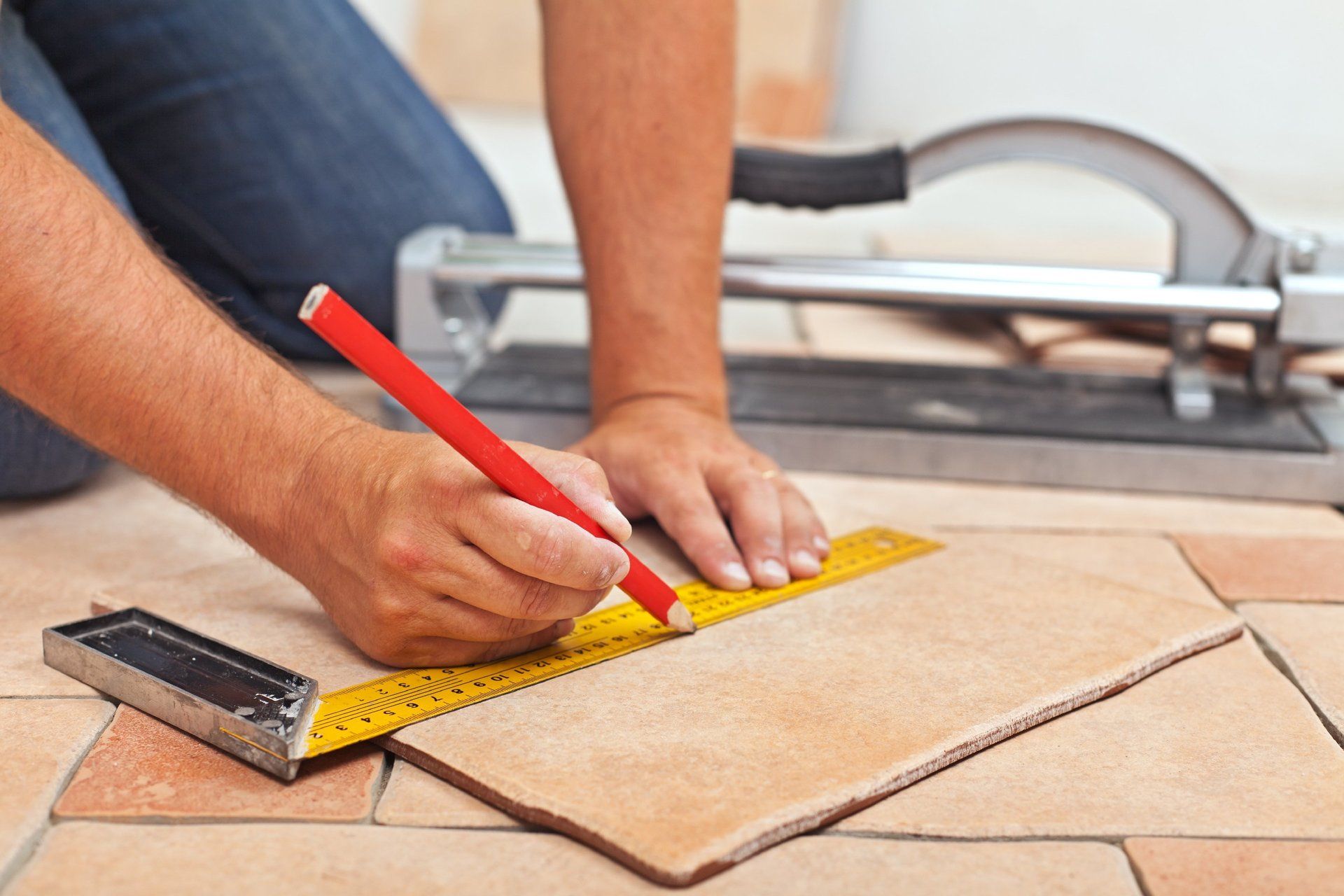
4. Tiling
Easily the skill that has benefited us the most is tiling—and it’s unbelievably simple to do. Lay mortar down, put the tile on top. There are nuances to this process, and I highly recommend watching several YouTube videos to see how it is done before you start in on your floor.
Many Home Depot and Lowe’s both offer free tiling classes about once a month. They let you learn with their supplies, showing you the right techniques. There is no limit to how many times you can take the class, either.
My advice: Take your time and use a level. Mix small batches of mortar at first, and don’t be afraid to throw some out if you can’t use it in time.
Additionally, I recommend buying a tile saw and learning how to use it. We paid $70 for our first saw about 10 years ago. Other than replacing the blade once, we haven’t had to do a thing to it. We have used it for more than 1,900 square feet of tile, including ceramic, glass, slate, and travertine.
5. Drywall repair
While hanging drywall from scratch can be an advanced-level DIY skill—bad results can be very obvious—every real estate investor should know how to do basic drywall repair. There’s absolutely no reason to pay your contractor money to repair a hole in the drywall left by an angry tenant (or a rambunctious kid, or a failed attempt at hanging a TV). Patching drywall is simple. And, as always, YouTube is happy to guide you in the right direction.
Keep spackle stocked for the small repairs. Once you know how to quickly patch a nail hole, there’s no need to panic about tenants hanging artwork against your wishes. Bigger holes take a bit more effort, but it’s nothing a handy DIYer can’t manage. You might have to cut out the drywall and go down to the stud in a small area. (Here’s a great Home Depot tutorial.) A saw, some drywall tape, and that ever-so-helpful spackle and you’re in business.
6. Simple carpentry
No one’s expecting you to create a to-order built-in shelving. But understanding the basics of woodworking will go a long way when you want to repair or update molding, attempt a DIY flooring installation or door installation, or patch rotting boards in your properties’ patios. Consider picking up a few basic tools, like a miter saw and a basic crosscut saw.
Plus, there’s a bonus to perfecting basic carpentry: Woodworking is an enjoyable hobby with lots of uses. If you find these simple repairs enjoyable, keep practicing. Soon enough, that built-in bookshelf might be no problem at all—you might even enjoy making furniture and building full decks.
Starting a career as a real estate investor certainly doesn’t require handyman training. Perfect these six easy trade skills, though, and you’ll be able to save significant money on one-time contractor fees. Is the stove misbehaving? Dining room chandelier flickering? Electrical training might help you identify the cause and make simple light repairs.
Source:
Bigger Pockets
Dusty Rhodes Properties is the Best Realtor in Myrtle Beach! We do everything in our power to help you find the home of your dreams. With experience, expertise, and passion, we are the perfect partner for you in Myrtle Beach, South Carolina. We love what we do and it shows. With more than 22 years of experience in the field, we know our industry like the back of our hands. There’s no challenge too big or too small, and we dedicate our utmost energy to every project we take on. We search thousands of the active and new listings from Aynor, Carolina Forest, Conway, Garden City Beach, Longs, Loris, Murrells Inlet, Myrtle Beach, North Myrtle Beach, Pawleys Island, and Surfside Beach real estate listings to find the hottest deals just for you!
Share