6 Summer Maintenance Tasks That Could Save You Cash—Have You Done Them All?

Dusty Rhodes • June 22, 2021

After what feels like the longest ever stretch of months stuck indoors, summer—glorious summer—is finally upon us. But before you get too comfy and curl up in a hammock with a delicious blended beverage, know that there are a few things you really should check off your to-do list first.


Yes, that’s right: We hate to be a drag, but in between barbecues and beach days, you still need to stay on top of maintenance around the home. Otherwise you might find yourself with big problems down the line—and big repair costs.


But don’t worry: We’re here to help you prioritize the tasks that’ll keep things running smoothly through the scorching months ahead, and get you back to your summer soirees ASAP.

1. Power-wash your house


“If most of your entertaining will be done outdoors, now is a great time to power-wash the deck, pool area, patio, driveways, and the front porch of your home for guests,” says Jeff Beck, CEO of Leaf Home Solutions.


Power washing has also been known to pay off big-time when it comes time to sell your house. According to the National Association of Realtors®, you can expect to add $10,000 to $15,000 to the sales price after pressure-washing exterior siding.


DIY: You can rent a power washer for between $70 and $300 a day, Beck says. But proceed with caution.

“Do your research before power-washing, as it comes with some safety concerns or can lead to property damage if the wrong pressure is used on the wrong materials,” he says.

Call in the pros: If you’re uneasy about blasting the house yourself, call in a professional. You can expect to spend between about $200 and $400.

2. Give your air conditioner a checkup


Your air conditioner works overtime in the summer, so now’s the time to make sure everything is running smoothly. It’s best to be proactive and check on the AC before you have an issue so that you aren’t sweltering while you try to diagnose a problem.


DIY: Make sure you’re regularly switching out disposable filters that fill up with pet and human gunk like skin cells and hair, says Mark Dawson, chief operating officer of Mister SparkyOne Hour Heating & Air Conditioning, and Benjamin Franklin Plumbing. The condenser unit also needs to be cleaned occasionally to prevent mold, mildew, and performance issues. If you’re handy, you can tackle this task yourself.


“Homeowners need to drain the pan below the condenser and clear all lines to allow excess water pulled from the air to drain out,” Beck says. 


Call in the pros: You can also call in a technician to clean out the condenser unit, Dawson says. Prices vary across regions.


Also consider scheduling a yearly air-conditioning tuneup (expect to spend between $75 and $200) to make sure your unit is operating at peak performance.


“Heating and air-conditioning technicians are able to catch issues that may turn into bigger problems if not handled right away,” Dawson says.

3. Spruce up your home’s exterior


If something looks a little off on the outside, it probably needs your attention.


“Check your landscaping for overgrown trees and shrubs, especially if they are hanging over the home, and trim them down,” says Gregg Hicks, vice president of Modernize.com.


“Summer is also a good time to inspect and clean your siding,” says Hicks. “Check for storm damage, pollen, sap, and other signs of wear and tear, and clean and repair as needed.”


DIY: In addition to trimming the foliage around your house, now is the time to show your lawn some love.


“Fertilize and dethatch your lawn to promote the circulation of air, water, and nutrients to the soil,” says Kevin Busch, vice president of operations for Mr. Handyman. You can choose from special rakes, machines, or even liquids for dethatching the lawn.


Call in the pros: If you need to do some serious trimming, call in the tree professionals. Expect to pay a couple hundred dollars on average—the price is determined by the size of the tree.

4. Replace or fix up exterior doors


If something looks a little off on the outside, it probably needs your attention.


“Check your landscaping for overgrown trees and shrubs, especially if they are hanging over the home, and trim them down,” says Gregg Hicks, vice president of Modernize.com.


“Summer is also a good time to inspect and clean your siding,” says Hicks. “Check for storm damage, pollen, sap, and other signs of wear and tear, and clean and repair as needed.”


DIY: In addition to trimming the foliage around your house, now is the time to show your lawn some love.


“Fertilize and dethatch your lawn to promote the circulation of air, water, and nutrients to the soil,” says Kevin Busch, vice president of operations for Mr. Handyman. You can choose from special rakes, machines, or even liquids for dethatching the lawn.


Call in the pros: If you need to do some serious trimming, call in the tree professionals. Expect to pay a couple hundred dollars on average—the price is determined by the size of the tree.

5. Check on ceiling fans and windows


This is one home maintenance task you can easily knock out in an hour or two: Make sure your ceiling fans and windows are able to provide optimal cooling throughout the home.


DIY: “Homeowners should clean ceiling fans and change them to a counterclockwise rotation,” Hicks says. “This will help drive cool air toward the floor and cool a room’s temperature. Homeowners should also inspect windows and doors for any leaks, where cool air may be escaping.”


Call in the pros: If your window seals are in need of repair, this could be a DIY task for some homeowners.


“Resealing windows and doors … can help keep cool air in and your energy bills lower,” Hicks says. But resealing is an intermediate project, so consider calling a professional if you’re not comfortable with it.
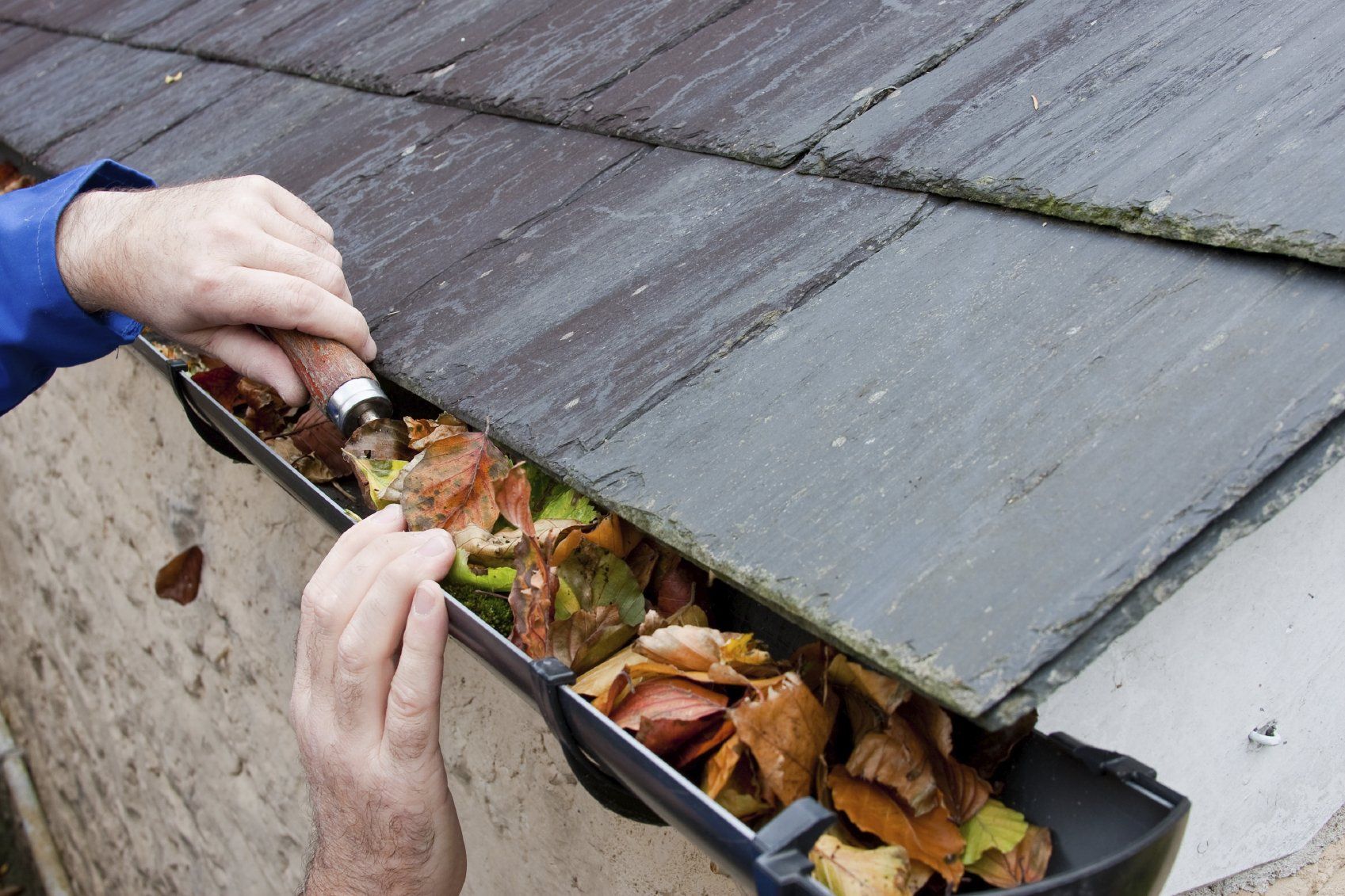
6. Keep an eye on the roof and gutters after storms


Warmer temperatures usher in unpredictable weather, which can mean storm damage to your home.


Monitor your gutters and roof to quickly detect—and hopefully avoid—costly damage.


“Debris can quickly fill your gutters or clutter your roof, so it’s important to assess any damage and clean your gutters after each storm,” Beck says.


DIY: Manually cleaning the gutters is a task you can accomplish over a weekend with a ladder, a spotter for safety, and a few garbage bags.


Call in the pros: Some homeowners prefer to leave roof work to the pros.


“Typical gutter cleaning can range from under $100 to several hundred depending on home size, the accessibility of your gutters, and the severity of debris,” Beck says.


If you need to replace gutters, that “can cost anywhere from $180 to $6,000 on average, depending on the home size and gutter material,” Hicks adds. “Installing gutter guards can help homeowners avoid a full gutter replacement down the road and can cost as little as $200 as a DIY project to $1,000 or more for heavier-duty guards.”


Source: Realtor.com


Dusty Rhodes Properties is the Best Realtor in Myrtle Beach! We do everything in our power to help you find the home of your dreams. With experience, expertise, and passion, we are the perfect partner for you in Myrtle Beach, South Carolina. We love what we do and it shows. With more than 22 years of experience in the field, we know our industry like the back of our hands. There’s no challenge too big or too small, and we dedicate our utmost energy to every project we take on. We search thousands of the active and new listings from Aynor, Carolina Forest, Conway, Garden City Beach, Longs, Loris, Murrells Inlet, Myrtle Beach, North Myrtle Beach, Pawleys Island, and Surfside Beach real estate listings to find the hottest deals just for you!

Share

By Dusty Rhodes November 10, 2025
If there was one simple step that could help make your home sale a seamless process, wouldn’t you want to know about it? There’s a lot that happens from the time your house goes under contract to closing day. And a few things still have to go right for the deal to go through. But here’s what a lot of sellers may not know. There’s one part of the process where some homeowners are hitting a road bump that’s causing buyers to back out these days. But don’t worry. The majority of these snags are completely avoidable, especially when you understand what’s causing them and how to be proactive. That’s where a great agent (and a little prep) can make all the difference. What’s Causing Some Buyers To Back Out The latest data from Redfin says 15% of pending home sales are falling through . And that’s not wildly higher than the 12% norm from 2017-2019. But it is an increase. That means roughly 1 in 7 deals today don’t make it to the closing table. But, at the same time, 6 out of 7 do. So, the majority of sellers never face this problem – and odds are, you won’t either. But you can help make it even less likely if you know how to get ahead. You might assume the main reason buyers are backing out today is financing. But that’s actually not the case. The most common deal breaker today, by far, is inspection and repair issues (see graph below):
By Dusty Rhodes November 3, 2025
You’ve got big plans for 2026. But what you do this year could be the difference between a smooth sale and a stressful one. If you’re thinking of selling next spring (the busiest season in real estate), the smartest move you can make is to start prepping now. As Realtor.com says : “If you’re aiming to sell in 2026, now is the time to start preparing , especially if you want to maximize the spring market’s higher buyer activity.” Because the reality is, from small repairs to touch-ups and decluttering, the earlier you start, the easier it’ll be when you’re ready to list . And, the better your house will look when it’s time for it to hit the market. Why Starting Now Matters Talk to any good agent and they’ll tell you that you can’t afford to skip repairs in today’s market. There are more homes for sale right now than there have been in years. And since buyers have more to choose from, your house is going to need to look its best to stand out and get the attention it deserves. Now, that doesn’t mean you have to do a full-on renovation. But it does mean you’ll want to tackle some projects before you sell. Your house will sell if it’s prepped right. And you don’t want to be left scrambling in the spring to get the work done. Because here’s the advantage you have now. If you start this year, you’ll be able to space those upgrades and fixes out however you want to. More time. Less stress. No sense of being rushed or racing the clock. Whether it’s fixing that leaky faucet, repainting your front door, or finally replacing your roof, you can do it right if you start now. And you have the time to find great contractors without blowing your budget or paying extra for rushed jobs. Get an Agent’s Advice Early To figure out what’s worth doing and what’s not in your market, you need to talk to a local agent early. That way you’re not wasting your time or money on something that won’t help your bottom line. As Realtor.com explains : “Respondents overwhelmingly agree that both buyers and sellers enjoy a smoother, more successful experience when they start early. In fact, a recent survey reveals that, for sellers, bringing a real estate agent into the process sooner can pay off significantly. ” A skilled agent can tell you: What buyers in your local area are looking for The repairs or updates you need to do before you list How to prioritize the projects, if you can’t do them all Skilled local contractors who can help you get the work done And having that information up front is a game changer. To give you a rough idea of what may come up in that conversation, here are the most common updates agents are recommending today, according to research from the National Association of Realtors (NAR): 
By Dusty Rhodes October 13, 2025
From the first coat of paint you used to freshen up your house’s trim to the stress of wrangling your way to a deal, you’ve been through a lot in that place. Now you’ve made it to the final hurdle of selling a home: moving out! Don’t worry, this is the easy part… but you want to do it right. Here’s how to get through the last leg of your journey without any bumps along the way. How to move out on time Once the paperwork is signed at closing, the buyers will officially own the house—and you won’t. That means that, technically, if you or your stuff is still there after the close, “the buyer could evict you,” says Joshua Jarvis , founder of Jarvis Team Realty in Duluth, GA. So make sure to have your exit strategy in place! Still, most buyers will understand if you need a bit more time and have a legitimate reason—like if you can’t move until the weekend due to your work schedule. Just be sure to discuss these issues as soon as possible before the close, so your buyers can plan accordingly. Decide what to leave behind To make sure you’re leaving behind everything the buyer wanted—and that you agreed to—double-check the closing documents . There should be an itemized list of what comes with the house . And even if the buyers didn’t formally request them, it’s just good form to leave certain types of things behind. Such as? “Generally speaking, you should leave anything that’s bolted to the wall,” says Jarvis. “Some homeowners want to take their fans and blinds to the next home, but generally if it’s screwed in, it stays.” Also, if you and the buyers agreed to transfer any services—such as alarm monitoring or pest control —be sure to set that up before you go. Leave the buyers a detailed note in the house, or ask your agent to get in touch with theirs to make sure the transfer goes smoothly. If you do inadvertently take an item that the buyers had requested, they have the right to ask for it back—and they could potentially sue you in civil court for the cost of a replacement. So, when in doubt, feel free to check with the buyers before you grab and go. But don’t leave anything else behind Just as important as what you leave behind is what you don’t. Your buyers have a right to move into a home that’s been cleared of furniture and other movable items they didn’t expressly request. “Some folks leave all kinds of unwanted clothes, furniture, paint cans, and other items, thinking they are helping the buyers,” Jarvis says. If you truly think your buyers might love to have your old planting pots or kiddie equipment, go ahead and ask—but please don’t assume they’ll welcome your leftovers. Even if you’re careful, you might forget something—at which point the buyers may contact their agent to get it back to you, but they also have the legal right to just keep or get rid of it. So double-check areas (e.g., the attic, garage, basement, storage shed, kitchen, and bathroom drawers) where people commonly overlook items. Clean up It’s common courtesy to leave the place not only clear of your possessions but also clean. However, that doesn’t mean you have to leave it immaculate. “Generally, you shouldn’t have to pay to have it deep cleaned,” Jarvis says. In most cases, a simple broom-clean will do. That means wiping down the countertops, cleaning out drawers, sweeping or vacuuming all the floors, and giving the bathroom and kitchen appliances a once-over so the new owners aren’t grossed out when they arrive. Are you forgetting anything? Before you close the door for the last time, run through a quick checklist. Did you eyeball every room for stray items? Have you forwarded your mail and turned off the utilities? Is the water running in the jacuzzi? We all get in a bit of a rush even in the best planned moves, but you won’t be able to get back in, so it can’t hurt to do a final run-through before you move out. Once you’re ready, it’s time to leave. You can drop a line to your real estate agent to let them know you’re out, although it’s usually a courtesy more than a necessity. If you’re feeling truly gracious, feel free to leave a note, card, or bottle of bubbly congratulating the people who’ve inherited your former home. Given all the fond memories you’ve built between those walls, wouldn’t it be nice to start the home’s new owners off on the right foot? And buy yourself some Champagne, too. Make it the good stuff—you’ve earned it.