10 Aging-in-Place Features Pros Swear By

They’re often called aging-in-place features, but things like curbless showers, nonslip flooring and wide walkways and doorways can benefit everyone, no matter their age or ability. “Regardless of aging in place, there is a place for these in day-to-day life, whether it be a teenager on crutches, a family member having had surgery, active kids,” designer Dana Bass says. “It’s not just about aging in place. We’ve got to account for unplanned life emergencies.”
Designer Tammy Battistessa of Ellaire Kitchen & Bath Design agrees. “Whenever possible, I include aging-in-place and universal design features in every project, as I believe many of these features benefit clients of all ages and abilities, in addition to allowing a client to safely remain in their home for a longer period of time,” she says.
Creating a home that can adapt also makes it more sustainable. “Aging in place is a key element to making legacy homes that can evolve over time,” architect Tim Barber says. With all that in mind, we asked more than 50 home design and construction professionals to share the aging-in-place features they always recommend. Here are the 10 that came up again and again.
1. Wide Walkways and Doorways
Planning ahead is one of the most important steps when incorporating aging-in-place features. Many of these elements require thoughtful design and construction, so it’s wise to start early — and to consider hiring professionals who understand the nuances. “Thinking through how you will really use the space makes all the difference,” designer Haiku Durden of HDS Design says. “Having a designer involved really makes a difference.”
A professional can help you create a plan that works for your current needs and anticipates future ones. “We currently default to aging-in-place features when our clients are near retirement or retirement age,” says designer Jenny Guggenheim of Guggenheim Architecture and Design Studio. “Preplanning by adding blocking behind the wall finish, spacious floor planning to allow for wheelchair or walker use.”
In fact, spacious layouts are among the most commonly recommended aging-in-place strategies. Wide walkways and doorways — and generous clearances around furniture and fixtures — make it easier for anyone to move through the home comfortably. Installing a continuous flooring material throughout also reduces tripping hazards caused by changes in height or texture between rooms.

Wide doorways and pathways are essential components of an aging-in-place design. “If space allows, I always design with a minimum of 36-inch doorway openings,” Battistessa says. This extra width provides easier access for mobility aids like walkers and wheelchairs and simply makes moving through the home more comfortable for everyone.
It’s also important to keep hallways and transitions between rooms simple and direct. “All connections from hallways into another space need to be more direct, or broader,” designer Cathy Cherry of Purple Cherry Architects says. “The goal is to avoid creating tight turns, so when aging in place you can navigate those connections easily.”
In the kitchen, designers recommend at least 48 inches of clearance between countertops and an island to ensure a safe and accessible work zone. “We make sure aisleways in kitchens are 48 inches or more,” designer Alex Bowman of Kirby Kelly Studio says. “That really helps plan for future assisted access.”
Appliance placement and workflow are equally important. “Make sure you really consider the kitchen triangle as you get older,” builder Amy Hendel of Hendel Homes says. “You want to have your kitchen very functional.”

2. One Floor, No Steps
Many design and construction professionals agree that the safest homes are single-level and with minimal or no steps. “Ideally, there are no steps at all throughout the house, from the garage to the house, or into showers,” Cherry says.
Thoughtful layout decisions can also make daily life easier. Designer Stephanie Larsen recommends placing the garage close to the kitchen whenever possible. “When possible, this thoughtful choice allows for added ease when unloading heavy groceries,” she says.
Even if you’re not building a home from the ground up, there are still smart layout strategies to consider. “In a two-story home, we might reconfigure the downstairs to create a comfortable and accessible living space so clients can avoid frequent trips up and down stairs,” designer Maegan Swabb of M. Swabb Interior Design says.
Swabb says her firm uses Houzz Pro software for all of its accounting and client communication needs.
A spacious primary suite on the first floor is another key element of an aging-in-place design. It’s important to allow ample room to move comfortably around the bed and furnishings — and to accommodate medical equipment if needed. “When planning for long-term aging in place, you’re not solely thinking about access issues,” Cherry says. “You’re also thinking about potential staffing support issues, how to provide fantastic views should one become bedridden, the ability for individuals to move themselves and the ability for others to be able to move them.”
If steps can’t be avoided, consider adding a ramp with a gentle slope to create a smooth and accessible transition into the home.
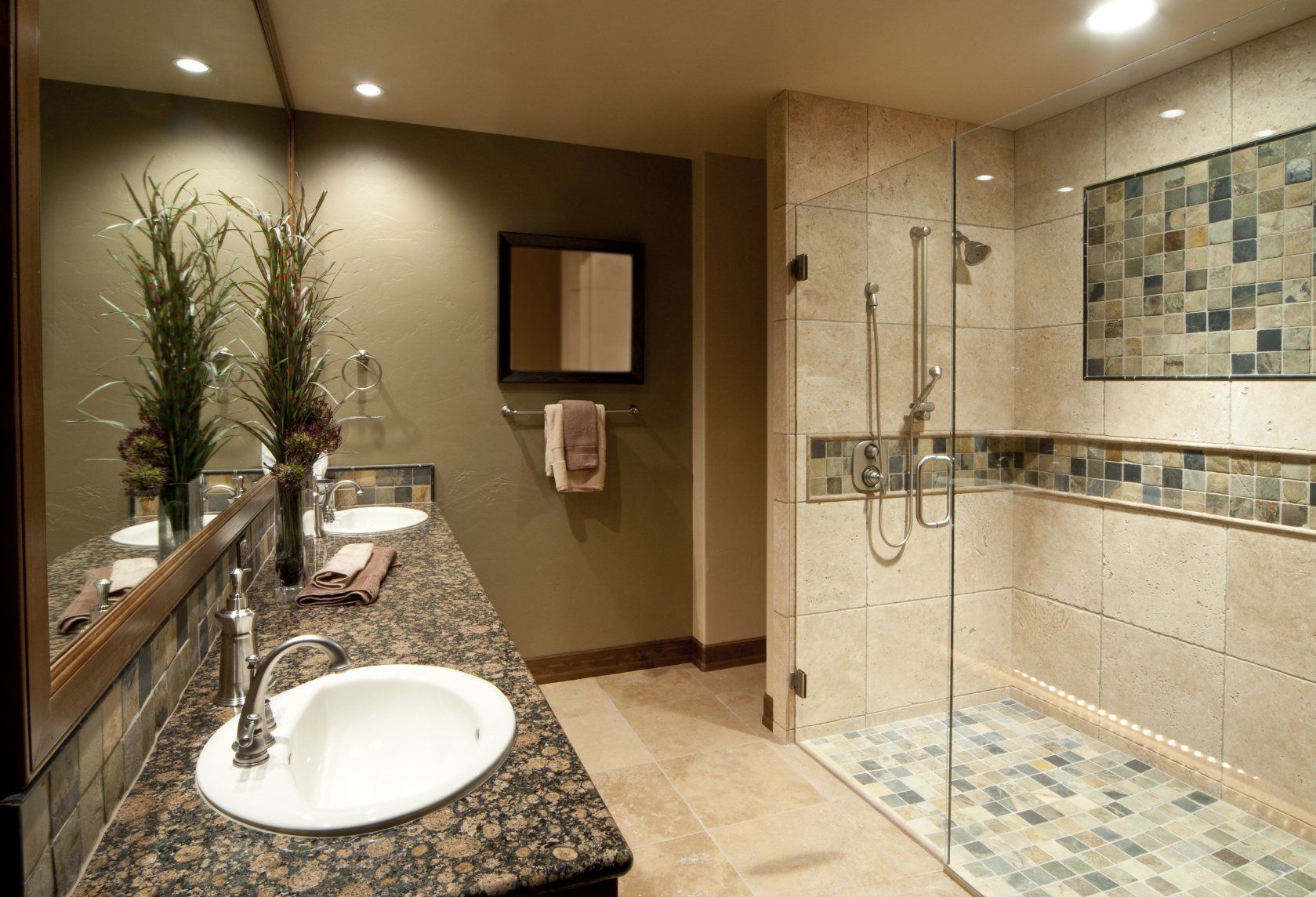
3. Curbless Shower
One of the most highly recommended features for aging in place is a curbless shower. By eliminating the threshold into the shower area, this design creates a smooth, barrier-free entry that enhances safety and accessibility — especially for those using a wheelchair or walker or who have limited mobility. “I always recommend that clients invest in curbless showers and grab bars,” Larsen says. “These additions help to avoid trips and slips and are functional in the event that a wheelchair or walker is needed when they are older.”

4. Grab Bars
Grab bars are an essential component of any bathroom designed for aging in place — but they require proper planning. These safety features can’t be mounted just anywhere. Structural backing must be installed behind the wall to ensure the bar can safely support weight and pressure during use. Even if you don’t need grab bars right away, design and construction professionals strongly recommend adding the necessary backing during a remodel or new build so the space is prepared for future installation.
Modern grab bars are also more stylish than ever. Many double as towel bars or toilet paper holders, blending seamlessly into the space. Some even come as part of coordinated bathroom fixture collections, making it easy to match them with shower heads, faucets and other components.
Professionals recommend installing grab bars in the shower — particularly near a bench — and alongside the toilet to enhance safety and offer support where it’s needed most.

5. Bench
A bench is a crucial aging-in-place feature in a shower, offering a comfortable place to sit if needed. Paired with a nearby handheld sprayer, it allows users to shower while seated with ease and independence.
Designer Donna Kirsopp of Schloegel Design Remodel created a curbless shower with double doors specifically meant to accommodate wheelchair access. “The shower features a handheld shower head on a sliding bar, which doubles as a grab bar,” she says. “A thoughtful detail is the angled bench, providing a more ergonomic seating position that allows feet to rest comfortably behind, making showering while seated much easier. To enhance the experience further, the entire bathroom floor and shower bench are heated, offering a luxurious touch while maintaining functionality.”
Designer Kristen Benavides of Benavides Design House recommends a freestanding bench “so it can move around to accommodate a helper in the space if also needed down the road.”

6. Handheld Sprayer
As mentioned, a handheld sprayer positioned near a bench enables homeowners to sit and rinse off safely and comfortably. It also provides greater functionality for caregivers assisting with bathing. For added convenience and safety, choose models mounted on a slide bar that doubles as a grab bar.

7. Nonslip Flooring
Nonslip flooring is a smart choice throughout a home, but it’s especially critical in bathrooms and kitchens, where water exposure is frequent. In bathrooms, designers often recommend mosaic tiles with matte finishes and multiple grout lines, which offer improved traction. Classic pebble tile is also a popular option thanks to its naturally textured surface that helps prevent slips.

8. No-Bend Features
For many, bending over can cause pain or increase the risk of injury. When creating a kitchen for aging in place, pros try to minimize excessive bending and reaching. Wall ovens are a popular solution. “Many clients prefer a double oven or wall oven instead of the standard range so they don’t have to bend over to open the oven,” designer Alena Zoghi of Eskan Design Build says.
Drawer storage is another highly recommended feature for aging-in-place kitchens. “This reduces the need to bend down and reach for items, making it safer and more convenient,” designer Melissa Powell of Design Shop Home & Interiors says.
Designer Bonnie Kespohl of Kasa Interior Design agrees. “I’m recommending more drawer storage over cabinet doors with shelves to eliminate the need to squat down to see what’s inside a cabinet,” she says. “Pulling out a drawer and looking inside from the top view is a lot less strenuous and more efficient storage. You’re able to see what’s inside the space all the way to the back, which is so much more user-friendly.”
Barber always includes “wall ovens that don’t require bending, freezers on the bottom of refrigerators, plate storage at a convenient height and pullout shelves and Hafele magic corner base units to make deep spaces accessible. We often design counters at varying heights, especially for bakers, enclosures for small appliances at countertop height and shallow spice shelves at eye level on the back side of wall cabinet doors.”
Designer Katie Geresy of KTG Design recommends raising countertop heights to 37 inches. “The standard is 36 inches, but we always like to add an extra inch because you do notice the difference,” she says. “You don’t have to slightly bend at all when working in your kitchen or using the sink in your bathroom.”
If you’re including upper cabinets or already have them, consider installing pull-down shelving systems like the one from Rev-A-Shelf shown here. These systems bring items down to a comfortable, reachable height, reducing the need to stretch, reach or lift awkwardly.
Another smart idea is to raise laundry appliances to a more comfortable working height. Adding a pullout shelf below provides a convenient spot to place a laundry basket.

9. Abundant Lighting
As we age, our eyesight often diminishes, making well-lit spaces essential for safety. Poor lighting can increase the risk of accidents, so it’s important to provide ample, thoughtfully layered lighting throughout the home. “Our lighting is usually on a smart system — one easy button press will illuminate an entire room’s scheme — so you’re not running all over the place trying to light a space,” Bowman says.
In the kitchen, combine recessed ceiling lights with pendant fixtures and undercabinet lighting to create balanced, versatile illumination. Low-level lighting, such as LED strips installed in toekicks, is also a great addition — it softly lights pathways and helps prevent trips and falls during the night.

Here’s a good example of toekick lighting. This soft, low-level lighting is also recommended for bathroom vanities to provide safe guidance during nighttime bathroom visits.
“Glare is another important consideration when selecting materials,” designer Jennifer Morris of JMorris Design says. “Shiny surfaces can be hard on the eyes.” Morris uses Houzz Pro software to help manage her design projects.

10. Easy-to-Grip Levers and Handles
Grip strength is an important consideration when designing a home for aging in place. Small cabinet knobs can be hard to grasp and pull, and traditional faucet knobs often require awkward twisting motions. That’s why experts recommend choosing faucets with lever handles and cabinet hardware with sturdy pulls. “These are easier to operate than traditional knobs, making them more accessible for those with limited dexterity,” Powell says.
Another convenient option is a touch-free faucet, which activates with a simple wave of the hand. Some models even respond to a gentle tap on the faucet, offering hands-free control that’s both hygienic and user-friendly.
Source:
Houzz
Dusty Rhodes Properties is the Best Realtor in Myrtle Beach! We do everything in our power to help you find the home of your dreams. With experience, expertise, and passion, we are the perfect partner for you in Myrtle Beach, South Carolina. We love what we do and it shows. With more than 22 years of experience in the field, we know our industry like the back of our hands. There’s no challenge too big or too small, and we dedicate our utmost energy to every project we take on. We search thousands of the active and new listings from Aynor, Carolina Forest, Conway, Garden City Beach, Longs, Loris, Murrells Inlet, Myrtle Beach, North Myrtle Beach, Pawleys Island, and Surfside Beach real estate listings to find the hottest deals just for you!
Share